
Overview of Nutrient & Energy Characteristics of Everyday UK Supermarket Foods
Educational content only. No promises of outcomes.
This resource presents factual information about the nutrient profiles and energy density of commonly available supermarket staples, without making any claims about individual outcomes or dietary guidance.
Understanding Energy Density
What is Energy Density?
Energy density refers to the amount of energy (measured in kilocalories or kcal) present per unit weight of food, typically per 100 grams. This concept helps in understanding how different foods vary in their caloric content relative to their mass.
Some foods contain more calories in smaller volumes, whilst others provide fewer calories across the same weight. This variation relates to water content, fibre content, and macronutrient composition.
Understanding energy density context helps when examining the range of choices available in UK supermarkets, as different foods contribute different amounts of energy to daily consumption.
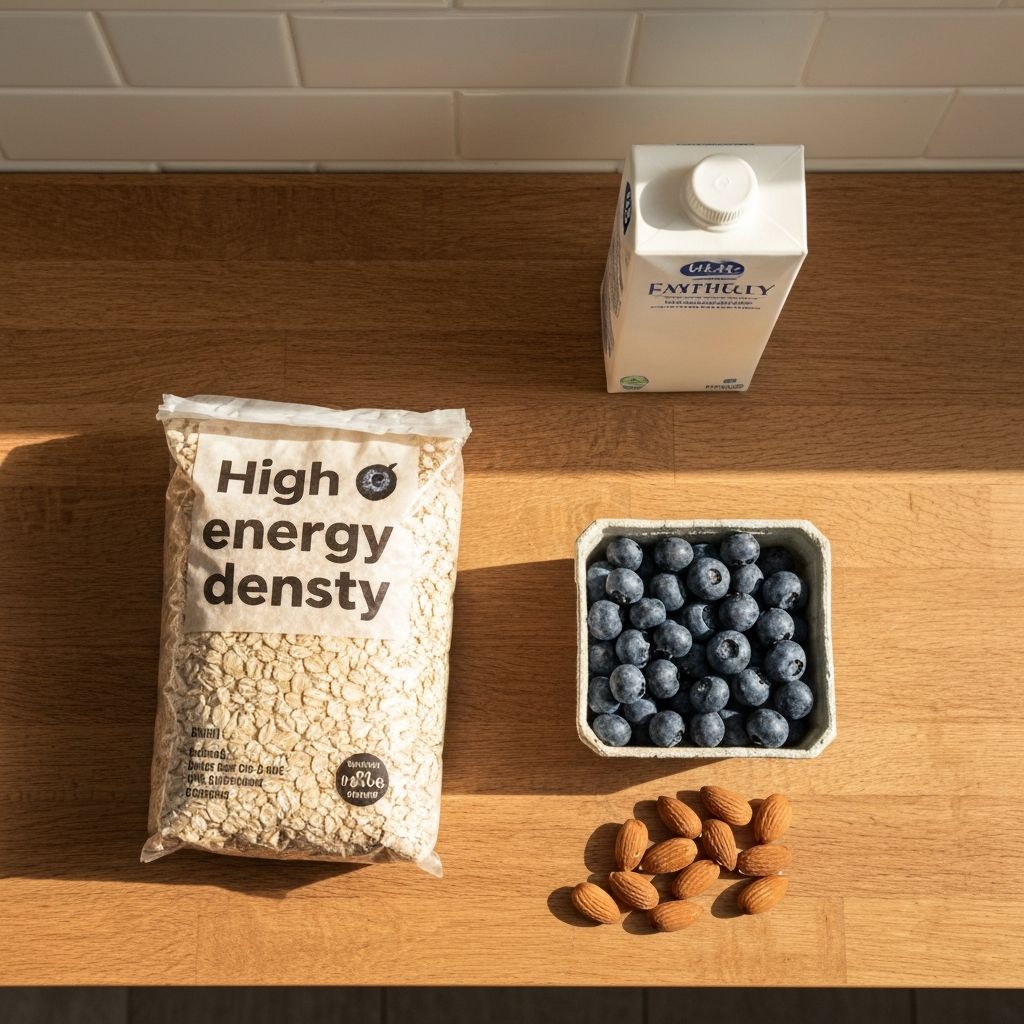
Protein-Rich Staples
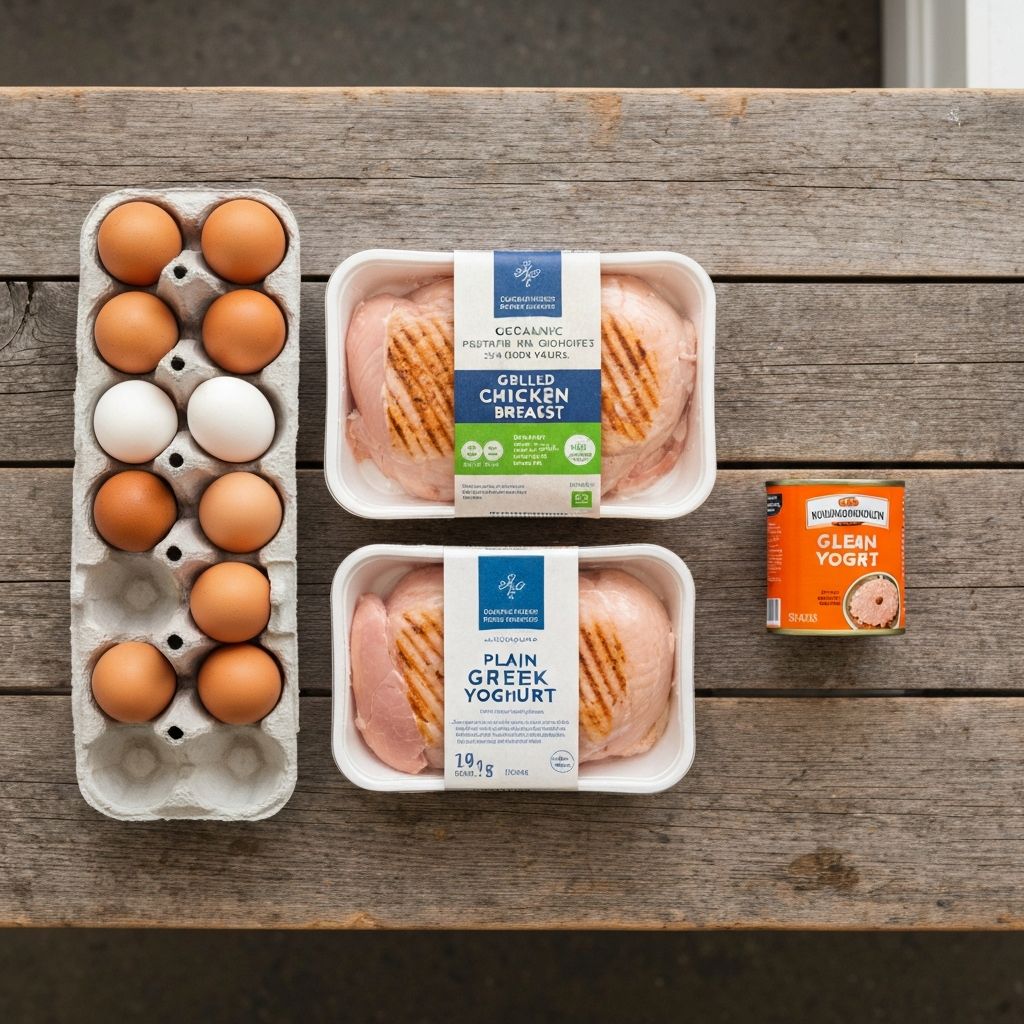
Common Protein Sources in UK Supermarkets
Eggs are a widely available source of complete protein, providing all essential amino acids. They are typically packaged in standard cartons and widely stocked across UK retailers.
Chicken breast is a lean protein option commonly found in the fresh meat section. It contains approximately 31g of protein per 100g with minimal fat content.
Plain Greek-style yoghurt, available in most UK supermarkets, typically contains around 10g of protein per 100g serving, depending on the specific product.
Tinned tuna is shelf-stable and convenient, offering approximately 26g of protein per 100g (when drained), making it a readily available option.
Fibre Sources Commonly Available
High-Fibre Supermarket Staples
Oats are a widely available whole grain containing approximately 10-11g of fibre per 100g. They are typically sold as rolled oats, porridge oats, or oat-based products.
Lentils and tinned beans are shelf-stable sources of fibre and plant-based protein. Tinned varieties require no preparation and are convenient for regular use.
Wholegrain bread is commonly stocked in UK supermarkets, with fibre content varying by product. Typical wholemeal loaves contain 6-8g of fibre per 100g.
Fresh vegetables including broccoli, carrots, and leafy greens are fibre sources with varying water content and minimal energy density.

Healthy Fat Options
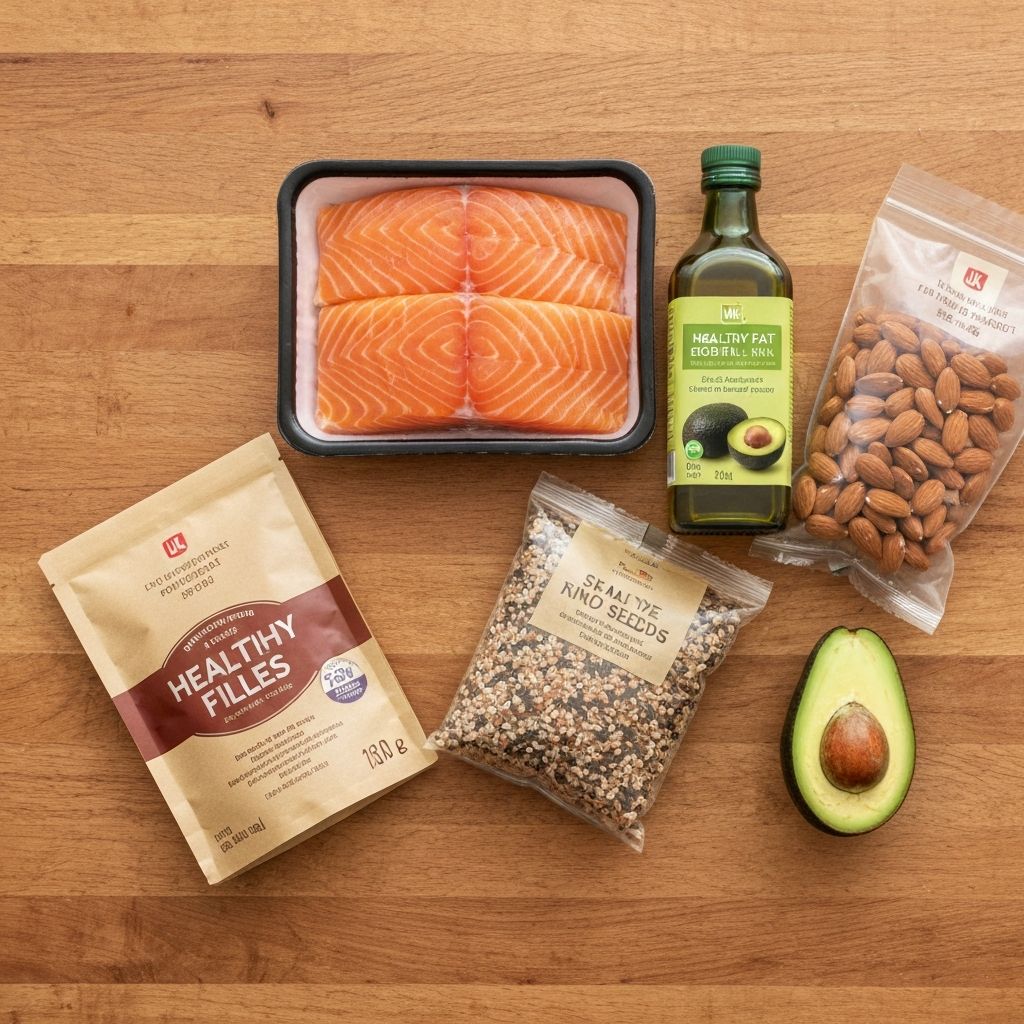
Fat-Containing Staples in UK Supermarkets
Salmon fillets are a widely available oily fish containing omega-3 fatty acids, available fresh or frozen in most UK supermarkets.
Nuts and seeds, including almonds and mixed seeds, are shelf-stable options available in various packaging sizes across supermarket aisles.
Olive oil and other plant-based oils are common kitchen staples, with different varieties available depending on the retailer and specific product selection.
Avocados are increasingly available in UK supermarkets, though their seasonal availability may vary by time of year and retailer.
Fresh Produce and Low-Energy-Density Foods
Vegetables and Fruits Available Year-Round
Berries, including blueberries and strawberries, are widely stocked in UK supermarkets, typically sold fresh in punnets or frozen in bags.
Apples, carrots, broccoli, and spinach are year-round staples available in most UK retailers in various forms (fresh, frozen, or in some cases, preserved).
These foods typically have high water content and contain fibre, contributing to their lower energy density compared to other food categories.
Fresh produce selection varies by season and retailer availability, but core vegetables and fruits remain consistently available throughout the year.

Comparison of Processed vs Whole-Food Items
UK supermarkets stock both whole-food items and processed alternatives in various categories. The differences in preparation, added ingredients, and nutrient profiles between these options can be observed by examining packaging and nutritional information.
Ready-made meals typically contain added salt, sugars, and fats compared to equivalent home-cooked options made from individual ingredients. The nutritional information on packaging allows for transparent comparison.
Breakfast items provide a clear example: a bowl of porridge oats with milk and berries differs significantly from pre-packaged cereal or breakfast bars in terms of ingredient list and macronutrient profile.
Traffic Light Colours & RI Percentages
UK supermarket packaging displays front-of-pack traffic light labels and Recommended Intake (RI) percentages for key nutrients: fat, saturated fat, sugar, and salt.
Traffic light colours indicate nutritional content: green indicates lower levels, amber indicates medium levels, and red indicates higher levels of the specified nutrient per serving as defined by the manufacturer.
RI percentages show how much of the daily recommended intake of a nutrient is provided by one serving of the product. Individual needs vary widely, and these are population-average guidelines.
Understanding these labels provides context for comparing similar products and assessing the nutritional information presented by food manufacturers.
Portion Size Context
Manufacturer-defined serving sizes listed on packaging may differ significantly from typical household portions. The nutrition information on UK supermarket products is based on these specific serving sizes.
Understanding the difference between the portion size used for nutritional labelling and actual consumption patterns provides important context when assessing food information.
Household measures (such as handfuls, spoons, or cups) may not align with the packaged serving size, which can affect interpretation of the nutritional data presented.
Detailed Supermarket Food Comparisons
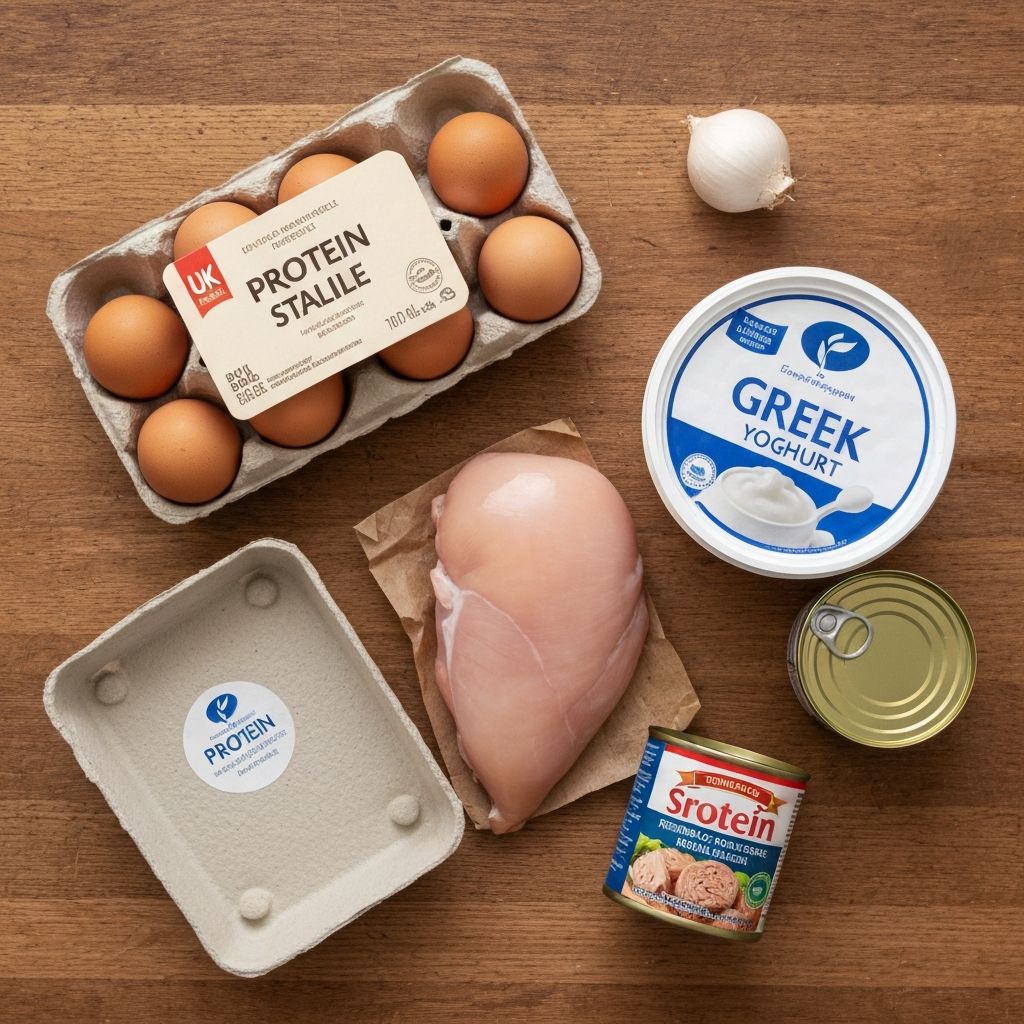
Protein-Rich Staples
Detailed nutrient profiles of eggs, chicken, Greek yoghurt, and tinned tuna.
View detailed nutrient information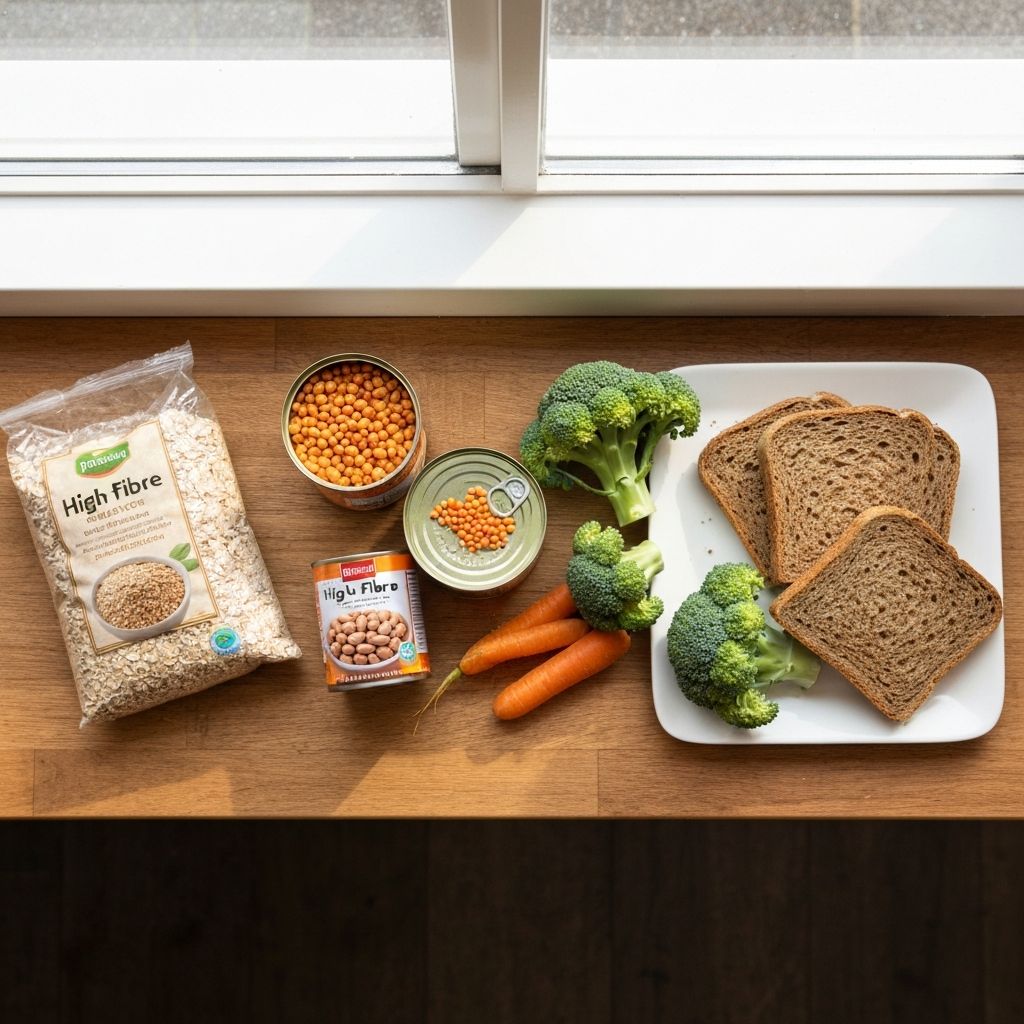
High-Fibre Options
Energy and satiety context for oats, lentils, beans, and wholegrain bread.
View detailed nutrient information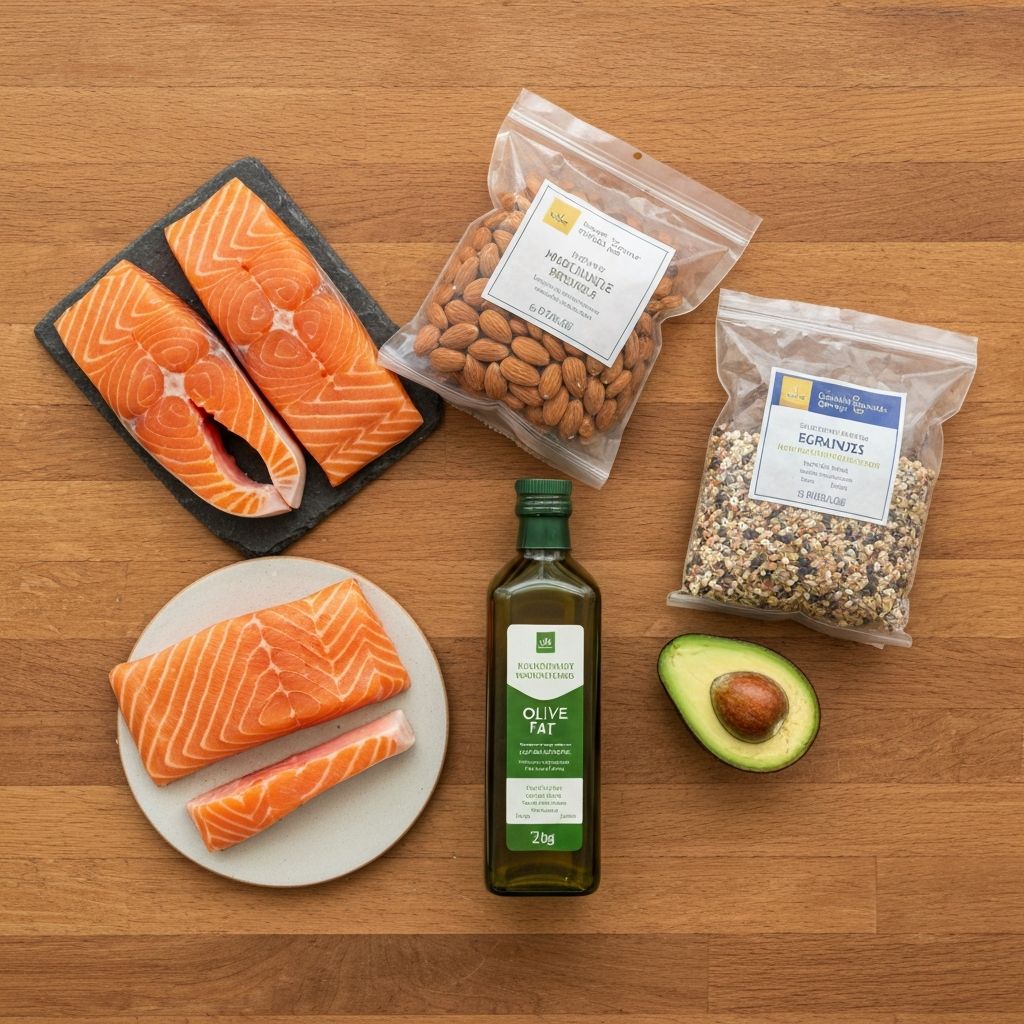
Healthy Fat Sources
Composition overview of salmon, nuts, seeds, and plant-based oils.
View detailed nutrient information
Low-Energy-Density Produce
Characteristics and comparisons of berries, vegetables, and apples.
View detailed nutrient information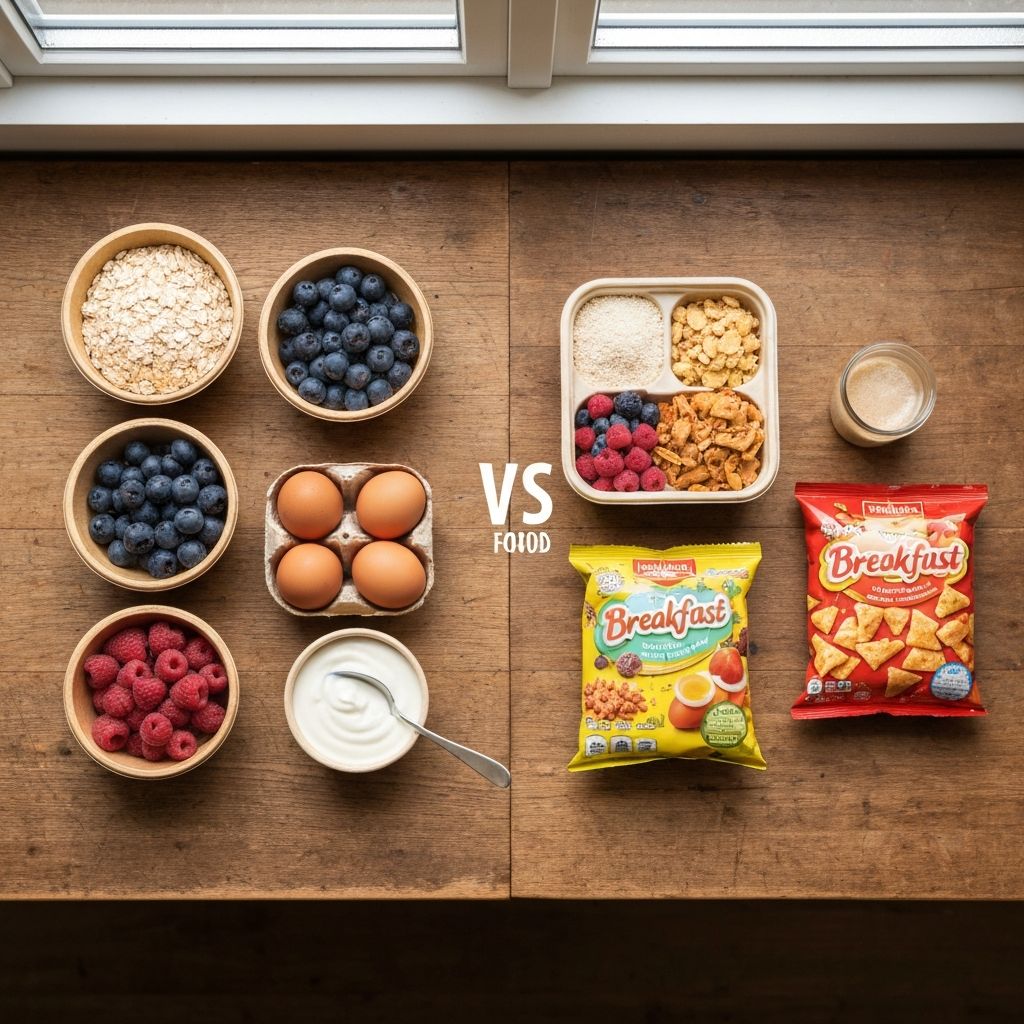
Whole-Food vs Processed
Breakfast and snack items comparison from UK supermarkets.
View detailed nutrient information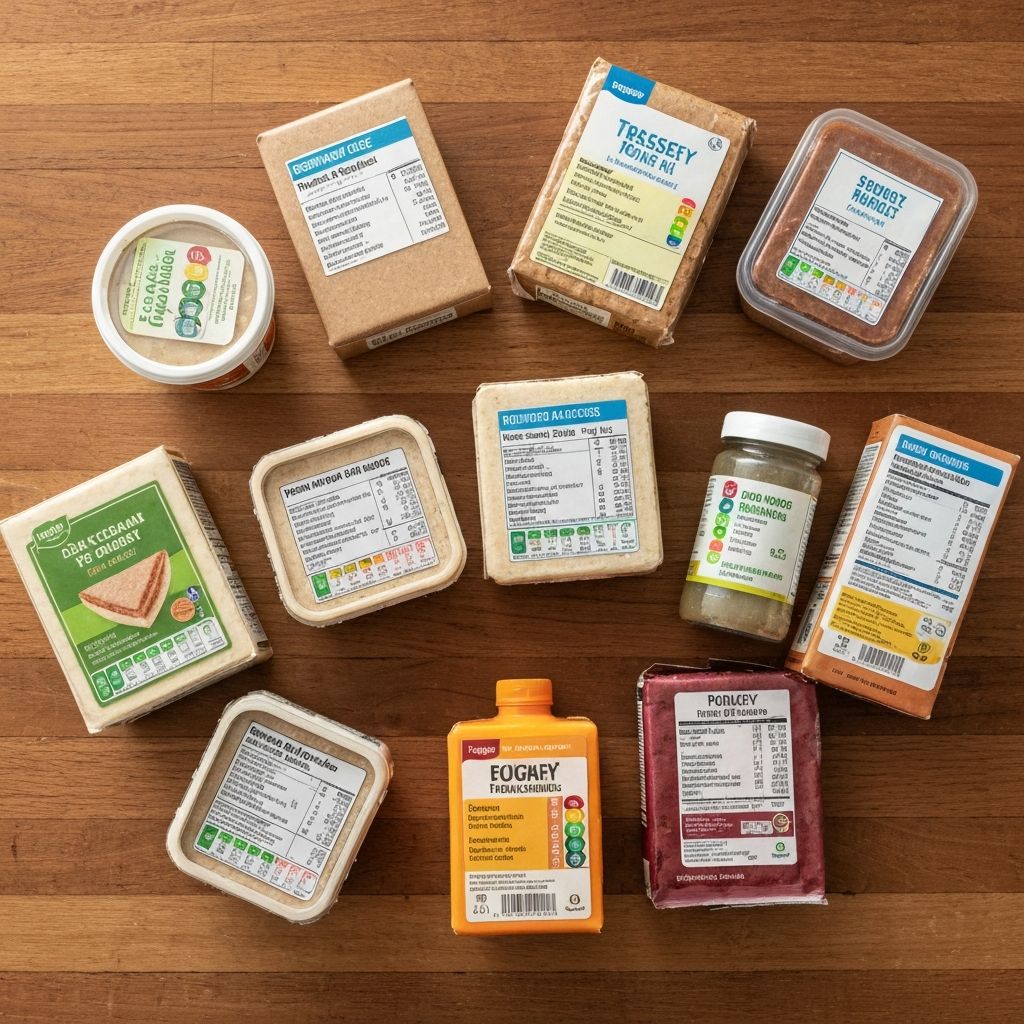
Understanding Packaging Labels
Traffic lights, RI percentages, and how to read UK supermarket information.
View detailed nutrient informationFrequently Asked Questions
This resource provides factual, educational information about the nutrient and energy characteristics of foods commonly found in UK supermarkets. It is intended for informational purposes only and does not provide dietary recommendations or make claims about individual outcomes.
Energy density is measured in kilocalories (kcal) per 100 grams of food. It reflects how much energy is present relative to the weight of the food. Foods with high water or fibre content typically have lower energy density than those with higher fat content.
Macronutrients are nutrients required in relatively large amounts: protein, carbohydrates, and fat. These are the main energy-providing components of food. Different foods contain different ratios of macronutrients.
Traffic light colours on UK food packaging indicate the level of nutrients such as fat, saturated fat, sugar, and salt per serving: green indicates lower levels, amber indicates medium levels, and red indicates higher levels according to defined thresholds.
RI (Recommended Intake) percentages show what proportion of the daily recommended intake of a nutrient is provided by one serving of a product. These are population-average guidelines, and individual needs vary widely.
Whole foods are typically in their natural state with minimal processing, whilst processed foods have been altered through cooking, preservation, or other methods. They often differ in ingredient composition and nutrient profiles.
Fibre is a carbohydrate that the body cannot fully digest. It plays a role in digestive health and is found primarily in plant-based foods including vegetables, fruits, grains, and legumes.
UK nutrition labels typically display energy content (in kcal), macronutrients, and key micronutrients per serving. Traffic light colours provide quick visual reference for nutrient levels. Always check the serving size used for the labelling.
No. Fats vary in their composition. Saturated fats, unsaturated fats (including monounsaturated and polyunsaturated), and trans fats each have different characteristics and are found in different foods.
No. This resource provides educational information about food characteristics. It does not provide dietary recommendations, health claims, or individual guidance. Consult qualified professionals for personal dietary decisions.
Continue Exploring Everyday Food Characteristics
Browse our detailed comparisons and informational guides to learn more about the nutrient profiles of foods available in UK supermarkets.
Explore Food Comparisons