Low-Energy-Density Fresh Produce
Characteristics Compared - Berries, Vegetables, and Apples
Berries
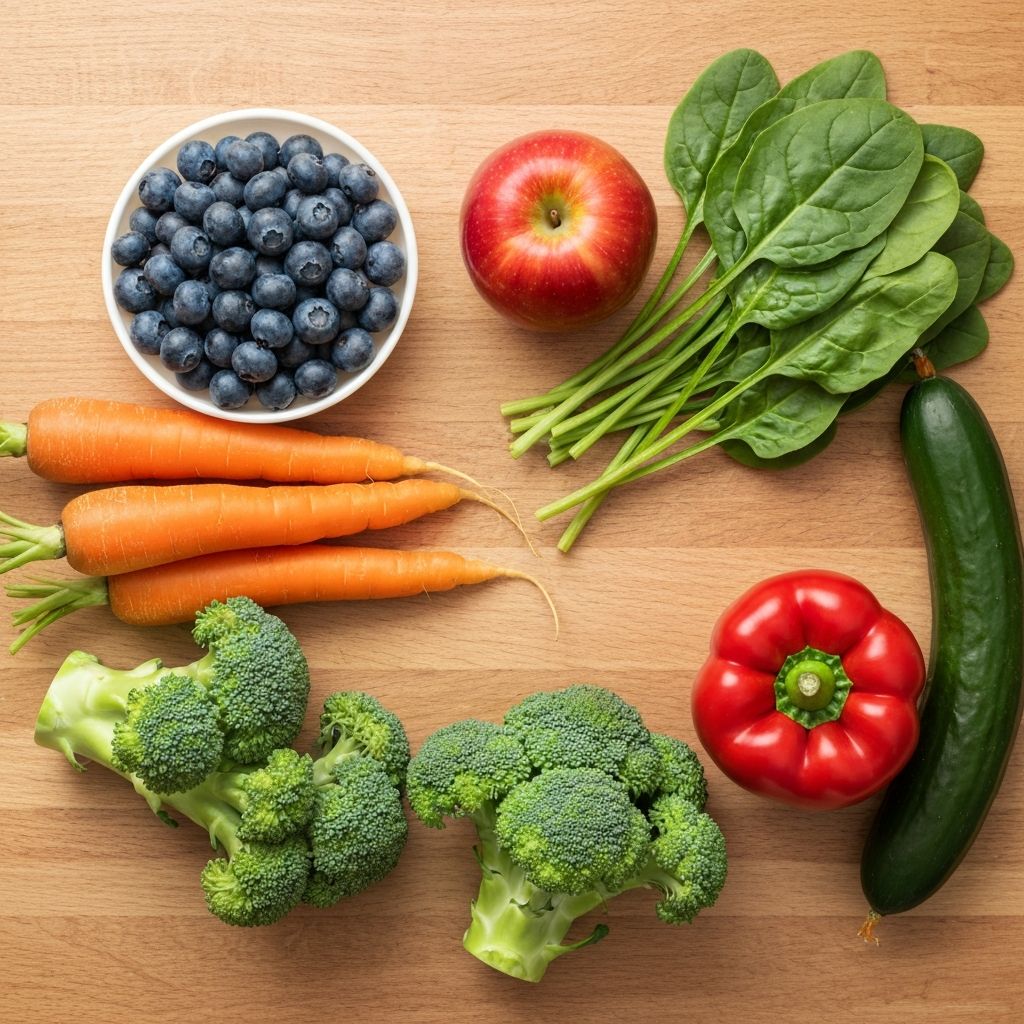
Berries including blueberries, strawberries, and raspberries are widely stocked in UK supermarkets, available fresh in punnets or frozen in bags. Berries have high water content (approximately 80-90%), contributing to their low energy density. Typical energy content ranges from 32-57 kcal per 100g depending on the type.
| Berry Type | Energy per 100g | Water per 100g | Fibre per 100g |
|---|---|---|---|
| Blueberries | 57 kcal | 84g | 2.4g |
| Strawberries | 32 kcal | 91g | 2g |
| Raspberries | 52 kcal | 86g | 6.5g |
Vegetables
Common vegetables available year-round in UK supermarkets include carrots, broccoli, spinach, peppers, and tomatoes. These vegetables typically have high water content and low energy density, ranging from approximately 18-34 kcal per 100g for most varieties. Fibre content varies by vegetable type.
| Vegetable | Energy per 100g | Water per 100g | Fibre per 100g |
|---|---|---|---|
| Broccoli | 34 kcal | 92g | 2.4g |
| Carrots | 41 kcal | 88g | 2.8g |
| Spinach | 23 kcal | 91g | 2.2g |
| Red Pepper | 31 kcal | 92g | 1.9g |
Apples
Apples are year-round staples in UK supermarkets, available in multiple varieties. Apples contain approximately 52 kcal per 100g and have high water content (approximately 86g per 100g). The fibre content is found primarily in the skin and flesh, approximately 2.4g per 100g.
| Apple Type | Energy per 100g | Water per 100g | Sugars per 100g |
|---|---|---|---|
| Granny Smith | 52 kcal | 86g | 9.3g |
| Gala | 52 kcal | 86g | 12g |
| Honeycrisp | 52 kcal | 86g | 10.4g |
Energy Density and Water Content
Water comprises a significant proportion of fresh produce, contributing to their lower energy density. Energy density is calculated as energy content (kcal) per unit weight. Because water provides no energy, foods with high water content have lower energy density per 100g compared to foods with less water.
The relationship between water content and energy density is direct: as water content increases, energy density decreases, assuming other components remain constant. This is why fresh produce typically has low energy density compared to dried fruits, nuts, or oils.
Cooking methods and processing can affect water content. Fresh produce naturally contains more water than processed alternatives, which may have water removed or reduced during manufacturing.
Fibre in Produce
Fibre is found throughout plant-based foods. In vegetables, fibre is distributed throughout the structure. In fruits like apples, fibre is concentrated in the skin and the insoluble cellulose of the flesh.
Raspberries are notable for their high fibre content (6.5g per 100g), whilst strawberries contain less (2g per 100g) despite similar appearance. Cooking or processing can affect fibre accessibility and digestibility.
The ratio of soluble to insoluble fibre varies by produce type and affects how the fibre behaves during digestion. Different fibre types are found in different plant structures.
Informational Content: The information presented here is educational and factual about food composition. Individual energy needs, food preferences, and dietary choices vary widely. This content does not provide nutritional recommendations or make claims about outcomes.
Explore Other Food Categories
Browse additional comparisons and informational guides about UK supermarket foods.
View all explorations